
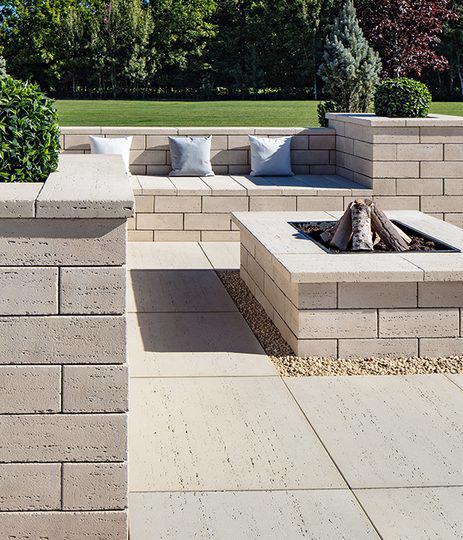
You may be looking at your backyard and thinking about how nice it would be to have a patio. It would give you a way to enjoy the warm weather over the summer and a place to entertain friends and family.
The big question: do it yourself, or hire someone?
The good news here is that a DIY patio is doable for a homeowner willing to put in the work. But with every major project, there’s always more to it than laying stone on dirt. The materials you choose and the way you prepare the base will determine whether the patio lasts for years or starts shifting after a few winters.
The 3 Phases of a DIY Patio Install
You can break patio work into three major stages. Of all three, the one you absolutely want to make sure is done properly is the first: base preparation.
Base preparation gives your patio a steady place to stand. To do this well, you’ll need to excavate the land to the right space and compact the subgrade. After doing that, you’ll want to build up layers of crushed aggregate that get compacted again at each lift.
This part is notoriously easy to underestimate. It’s also something that absolutely must be done right because a patio is only as level and stable as the surface it sits upon.
Once the base is set, you lay your pavers. This is the fun part, but it requires attention. Patterns need to be consistent, and joints need to stay tight. You will also need to check your slope regularly so water drains away from the house.
The last phase is edge restraint and polymeric sand. Restraints lock everything in place, and sand fills the joints to prevent shifting and weed growth. Both steps are easy to skip if you’re tired, and both will cost you if you are not careful.
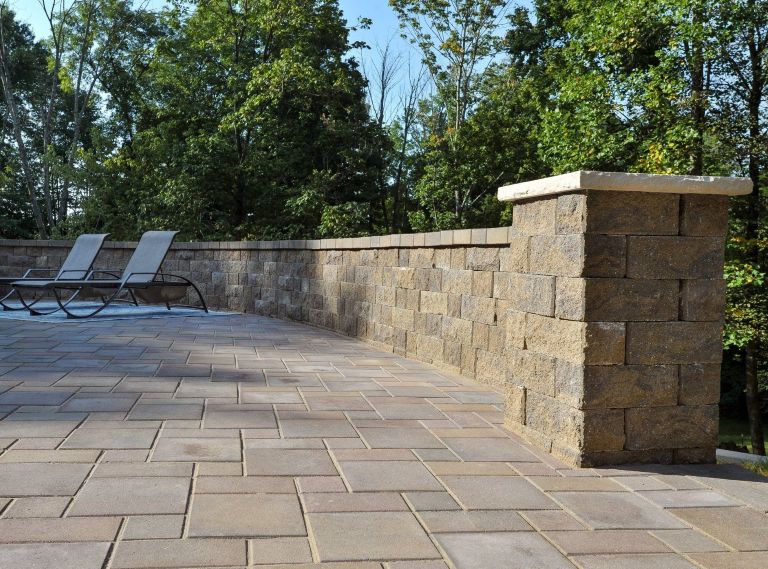
What You Need to Build a Patio That Lasts
Much of the decision-making happens when you choose materials. Dayton is prone to cold weather, which means you need something that will stand up to the freeze and thaw cycles. You want pavers rated for that kind of weather.
It’s hard to go wrong with Techo-Bloc Blu 60. Its smooth and slate textures are both very popular. The same can be said of Reading Rock’s Concourse Elite and Oxford Elite.
Beyond pavers, you will also need base aggregate, bedding sand, edge restraints, and polymeric sand. Ordering the right quantities matters. If you order too little, your project will stall out early. But the opposite is also not ideal, since it means paying for extra materials you won’t use.
This can be complicated, because you want to choose both the right materials and quantities. So if you want to make sure you do it all right, you can always talk with our team at Patio Supply. We can work with you on layout, material selection, and quantity calculation so you know exactly what to order before you break ground.
When a Custom Patio Calls for a Professional
Some homeowners start researching a DIY patio install and realize the scope is bigger than they expected. There can be a number of reasons for this that go far beyond skill alone. If the yard has a grade to it or the layout ties into a firepit or retaining wall, that can complicate an otherwise straightforward job. In situations like these, it’s always good to know you can call on someone with experienced hands.
Patio Supply works with a network of vetted local contractors who build with the same materials we sell. If you decide you’d rather hand the project off, we can connect you with someone who will do it right. You can also browse projects other homeowners have completed to see what’s possible.
Whether you’re going full DIY or bringing in a custom patio builder, the starting point is the same. Visit our showroom at 9125 State Route 48 in Dayton, call us at (937) 885-1948, or email office@patio-supply.com. We’re open Monday through Friday, 8:00 AM to 5:00 PM.
Leave a Reply